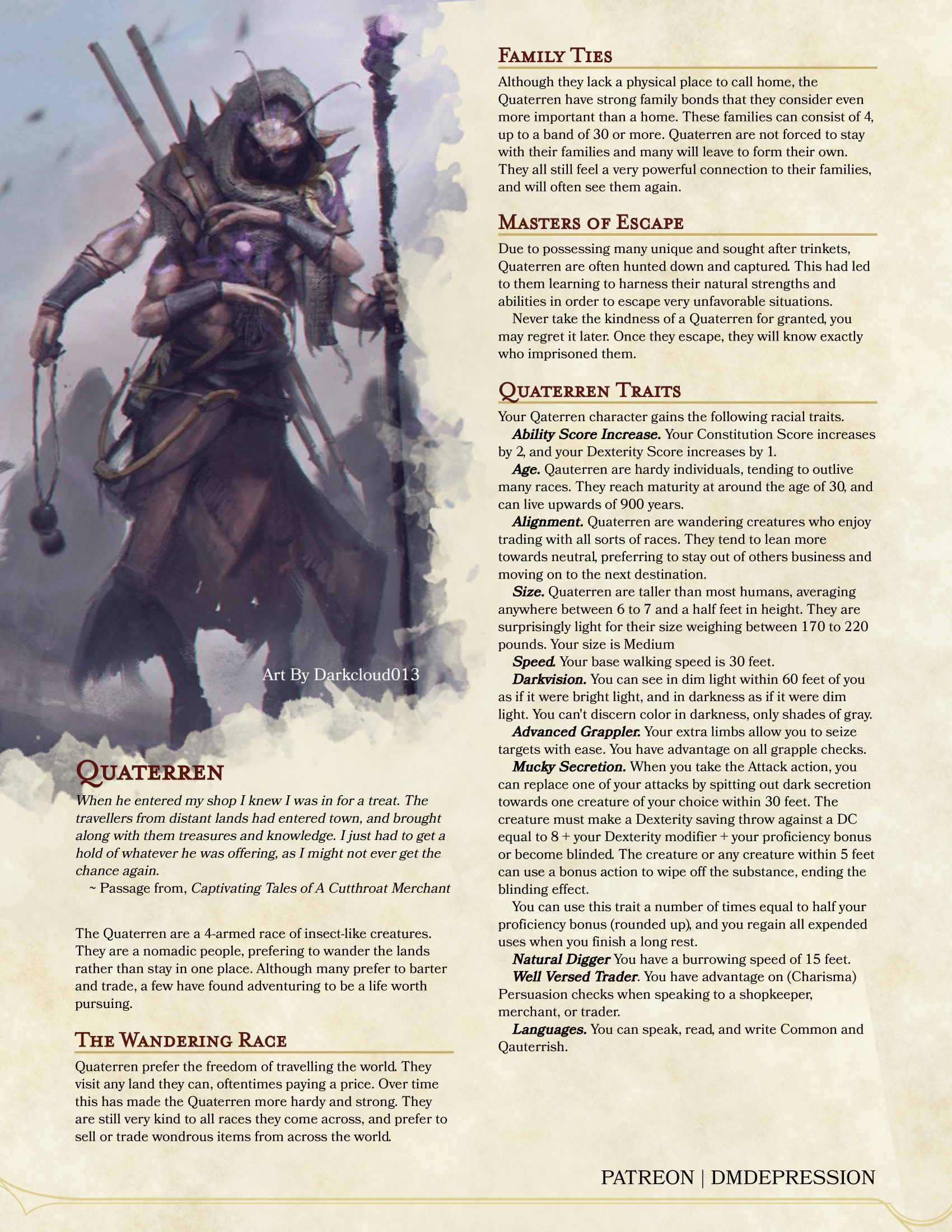
Homebrew refers to any content you create yourself: rules, monsters, items, worlds, classes, or even entire systems. Unlike official or fan-made content, homebrew has no built-in limits. It allows the DM to fully explore their creativity and tailor the game specifically to their group.
However, freedom comes with responsibility. It’s easy to get carried away, so balance and fun should always be the priority. The goal of homebrew isn’t to overpower the players or overwhelm the game—it’s to add something enjoyable. If everyone at the table is having fun, then the homebrew was successful.
Creating homebrew is similar to making quests or encounters: the goal is to make the session more engaging. The difference is that homebrew relies entirely on your creativity, and there’s no Challenge Rating (CR) or official guide to guarantee balance. Experience helps a lot—the more you DM, the easier it becomes to judge what will work.
There are many ways to come up with ideas. One effective method is taking inspiration from media you enjoy—books, games, movies, or shows—and adapting the core idea to fit D&D. Another is starting with a simple concept and building outward, rather than trying to create something complex right away.
You can also look at existing mechanics and reflavor or combine them. If two abilities serve similar purposes, you can merge them with a twist. Testing ideas in small ways, getting player feedback, and being willing to adjust things over time are all important. Homebrew doesn’t have to be perfect—it just has to make the game more fun and memorable.